
Staircase and Railing Refinishing in Halton Hills
Transforming a two‑storey home’s worn stairs and rail into a refined, durable focal point with craftsmanship-forward coatings and careful restoration.
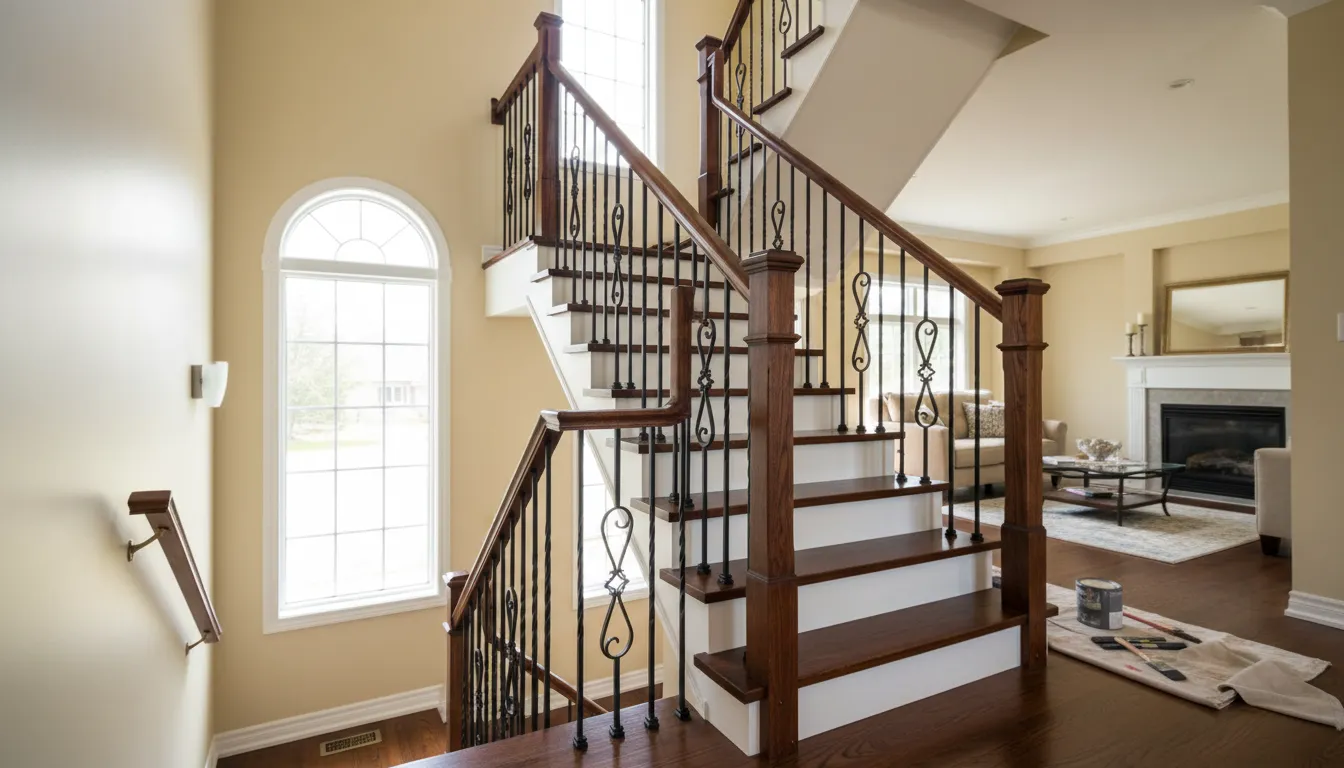
What we encountered and why it mattered
We were invited to a two‑storey home in Halton Hills with a staircase and railing that had seen decades of daily use. The owners wanted a sophisticated, modern look while preserving the structural character of the solid-wood balustrade. The home’s layout, proximity to neighbouring Georgetown and Acton, and an active family schedule shaped how we planned the work.
Extensive wear and multiple finishes
The treads and handrail showed areas of abrasion, old oil and lacquer layers, and localized water staining. Patch repairs and incompatible previous coatings meant we needed a conservative approach that removed failing finishes without excessively thinning the historic profiles.
Access and live‑in constraints
This was an occupied Halton Hills home with a busy household, so we staged containment to protect living spaces and limited noisy operations to daytime hours. The staircase connects the main floor to the second storey, so we planned logistics to maintain safe passage and comply with basic building safety expectations throughout the job.
A design-forward client brief
Homeowners requested a boutique, high‑end finish rather than a simple repaint—deep, hand‑rubbed tones on the handrail and hardwearing clear finishes on treads. That influenced our material selection toward premium conversion varnishes and hard oils that marry aesthetics with durability.
How we approached the refinishing
- 1
1. Site protection and assessment
We set up floor protection, negative‑pressure dust control and drop cloths to isolate the staircase and adjacent rooms. A full inspection looked for loose balusters, hidden rot, or code issues such as handrail height and guard spacing so we could recommend repairs without overstepping our painting scope.
- 2
2. Careful stripping and substrate prep
Where previous coatings were failing we used a combination of chemical strippers rated for interior use and low‑dust orbital sanding with 120–180 grit to reach solid wood without rounding edges. All repaired areas were consolidated with epoxy consolidant and compatible grain fillers to maintain crisp profiles and ensure even absorption of finish.
- 3
3. Stabilizing and minor carpentry
We re‑set and glued any loose treads and tightened new fixings for long‑term serviceability, using stainless steel screws in concealed locations where corrosion resistance matters. Damaged baluster tenons received custom‑cut inserts; these discreet carpentry repairs allowed us to deliver a finish that performed as well as it looked.
- 4
4. Primer and sealing for performance
On painted risers and stringers we applied a premium acrylic‑urethane primer to promote adhesion and block tannins; on exposed hardwood (oak handrail and treads) we sealed with a clear oil‑based sealer to even out absorption. For high‑traffic treads we recommended a catalysed conversion varnish—applied in thin, catalysed coats—for abrasion resistance and chemical stability in a residential environment.
- 5
5. Finish application and touch‑up
Handrails received a hand‑rubbed hard oil finish buffed to a low sheen, highlighting grain while providing water and hand‑oil resistance. Treads were finished with three thin coats of conversion varnish, sanded lightly between coats with 320 grit, and allowed full cure; painted components received two coats of acrylic‑urethane topcoat for scuff resistance. Final hardware and guard checks ensured everything met homeowner expectations.
How the home was changed for the better
The result balanced a contemporary aesthetic with the resilience a family needs. The staircase now reads as a carefully designed architectural element—contemporary in finish yet respectful of the home’s original woodwork. We left owners with clear care guidance and documentation for long‑term performance.
A lasting, low‑maintenance finish
The combination of hard oil on the handrail and catalysed conversion varnish on treads provides tactile warmth with industrial‑grade wear resistance. These materials resist scuffing, household cleaners and seasonal humidity shifts typical of Halton Hills and Halton County homes.
Preserved structural integrity and safety
Minor structural repairs and properly secured fixtures eliminated squeaks and loose components, restoring confidence in the stair’s safety. We verified clearances and guard stability and documented our findings so the homeowners have a maintenance record for future reference.
Detailed finish documentation and local recommendations
We supplied a care sheet describing compatible cleaners, re‑coating windows and approximate cure times, plus suggestions for seasonal checks given Halton Hills’ climate (America/Toronto timezone). Living near Georgetown and Acton, the homeowners appreciated locally relevant tips about humidity control and entry‑way protection to limit grit on treads.
Common questions about staircase refinishing
How long does a project like this typically take?
A straightforward refinishing for a two‑storey staircase generally takes 4–7 days from prep to final cure, depending on the extent of repairs and the cure time required by the chosen finishes. Weather and indoor humidity in Halton Hills can extend drying times, so we account for seasonal variation when scheduling.
How disruptive is the work to daily life?
We prioritise containment, daytime work windows, and maintaining safe passage through the house; occupants can usually use alternate routes during key phases. Dust control and low‑odour product options reduce interference, and we coordinate with homeowners to accommodate routines.
When should stairs be refinished rather than replaced?
Refinishing is appropriate when the structural members (treads, risers, stringers, balusters) are sound but surfaces are worn, stained or mismatched. Replacement is only recommended when there is significant rot, severe dimensional damage, or when a different layout is required—situations we identify during our initial assessment.
What maintenance will keep the finish looking its best?
Use a non‑abrasive cleaner and avoid ammonia‑based products; hard oil may periodically benefit from a refresh coat in high‑traffic areas, while conversion varnish requires minimal upkeep. Keep a doormat at entrances and consider seasonal humidity control—advice we tailor to Halton Hills’ climate and local conditions.