
Full exterior repaint and trim restoration for a Newmarket home
Comprehensive exterior renewal addressing failing trim, blended colour update, and long-term protection against Ontario weather.
What we faced at the outset
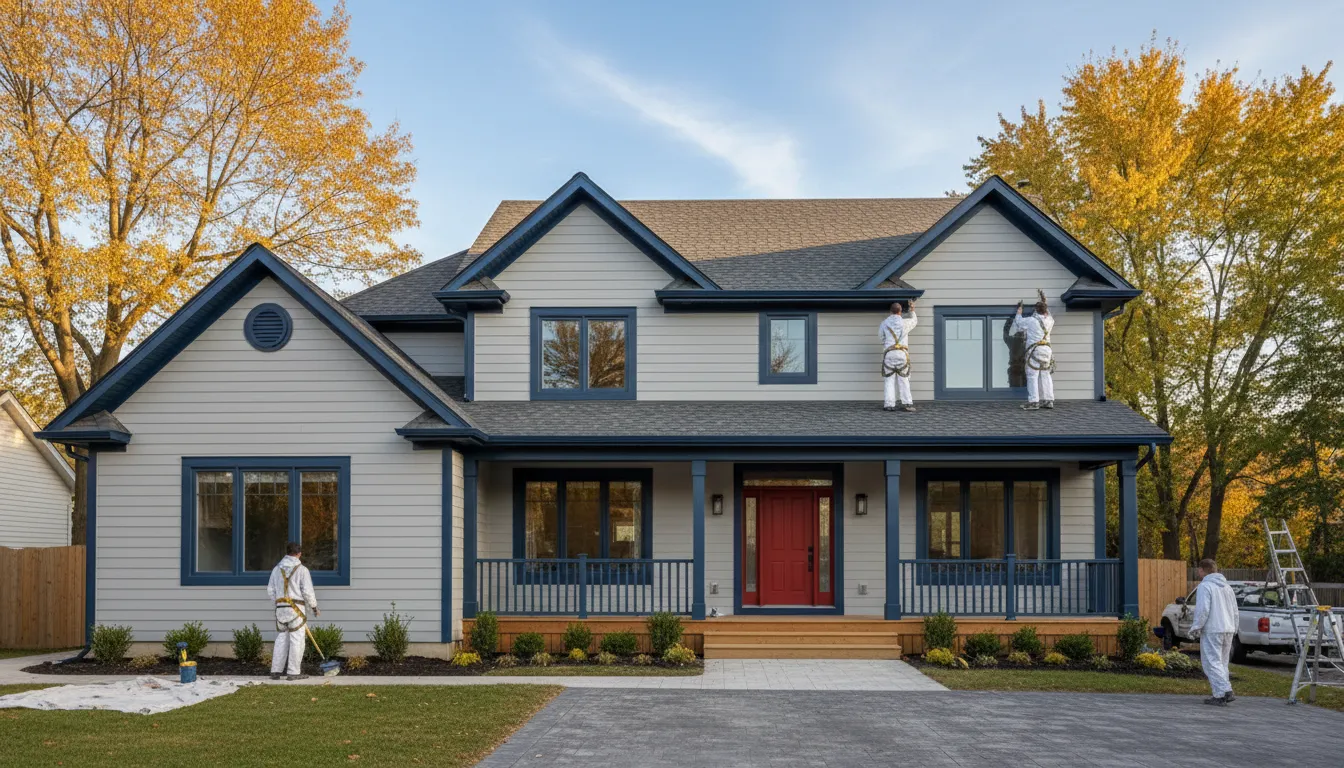
The project was a full exterior repaint and trim restoration on a two-storey home in Newmarket, Ontario. The house showed peeling paint, raised grain on cedar trim and intermittent moisture staining on lower walls. Homeowners wanted a refined, lasting finish and careful sequencing so the project fit into the family’s seasonal plans.
Deteriorated painted surfaces and trim
Multiple areas of the original acrylic enamel had lost adhesion, particularly on sheltered eaves and the south-facing façade. Exposed cedar trim had raised grain and some shallow checking that required feathered repairs rather than simple spot-painting to achieve a seamless finish.
Access, safety and weather window
Being a two-storey house with dormers, safe access required a mix of adjustable aluminum scaffolding and 24-foot extension ladders with roof anchors for certain gables. Working in the America/Toronto timezone climate necessitated planning around spring rains and late-season cold snaps to ensure coatings cured properly.
A desire for upgraded finishes and longevity
The owners were seeking a subtle modern palette and improved durability—moving from a mid-grade acrylic to a high-performance, acrylic-latex system with elastomeric options where needed. They wanted documented material choices and a clear maintenance plan for preservation in York Region and nearby Aurora and Vaughan.
How we approached the work
- 1
Survey, testing and prep strategy
We began with a site audit and moisture testing behind cladding at suspect areas, plus adhesion checks using a standard pull test. That informed a prep sequence: soft-wash cleaning (low-pressure detergent wash), focused sanding on failing edges, and selective peelback to sound substrate where necessary.
- 2
Trim repair and substrate stabilization
Damaged cedar trim and fascia were stabilized using epoxy consolidants for shallow checking and rot-treated replacements for any members beyond repair. Replaced pieces were milled to match existing profiles, primed with an oil-based, rust-inhibiting primer on nail heads and then an exterior alkyd or bonding primer on the timber.
- 3
Priming and substrate-specific coatings
We used an acrylic bonding primer on vinyl and fibre cement, and a high-adhesion alkyd primer on repaired cedar where recommended by the coating manufacturer. Metal flashings received a zinc-rich primer where corrosion was present, then an acrylic top-coat system to match the finish on other substrates.
- 4
Topcoats and colour application
For the topcoat we specified a premium 100% acrylic, high-build exterior latex with UV-resistant pigments to minimise fade on sun-exposed elevations. Accent trim and doors were finished with a semi-gloss acrylic-alkyd hybrid to highlight profiles while maintaining breathability on wood elements.
- 5
Detailing, cleanup and handoff documentation
Caulking joints used low-modulus, paintable silicone where movement was expected and polyurethane sealant on joints requiring greater flexibility. We completed a punchlist walk with the homeowners, supplied material data sheets, maintenance notes and recommended recoat windows based on local seasonal cycles.
The finished outcome
The house in Newmarket was restored to a cohesive, resilient exterior that balances aesthetics with durable performance. Work prioritised proven products and trades techniques to deliver a finish built for the local climate and the homeowners’ design intent.
Refined visual renewal
Colours were tuned on-site to ensure the new palette complemented neighbourhood tones while achieving the owners’ modern sensibility. The careful feathering and seamless trim repairs make the siding and millwork read as a single, intentional surface.
Improved performance and longevity
Using high-grade acrylic topcoats and substrate-correct primers reduced the risk of early failure from UV, freeze-thaw cycles and moisture ingress. Replaced or consolidated cedar trim, updated flashings and sealed transitions collectively reduce maintenance demands for years ahead.
Clear documentation and local care plan
We provided a concise maintenance guide and the manufacturer technical sheets for each coating used, and outlined suggested inspection intervals tailored to Newmarket’s climate (and proximate towns like Aurora and Vaughan). This ensures the family and future owners have a practical roadmap for upkeep.
Common questions about exterior repaints and trim restoration
How long will a full exterior repaint take?
Typical timelines for a two-storey home like this run from one to three weeks depending on prep complexity, weather windows and any trim replacements. Moisture testing and curing time for primers and topcoats are the schedule drivers, particularly in spring or late fall in the America/Toronto timezone.
How disruptive is the work to daily life?
We aim to keep disruption minimal: scaffolding is staged to allow safe access while leaving entryways clear, and soft-wash cleaning and sanding generate limited noise compared with demo trades. All scheduling and daily updates are handled by email to keep communication streamlined.
When do you recommend a full restoration rather than a simple repaint?
If paint is flaking across multiple elevations, trim shows rot or checking, or moisture testing reveals elevated substrate dampness, a full restoration is prudent. Addressing failures at the substrate and flashing level before repainting avoids recurring problems and delivers better long-term value.