
The Ontario Exterior Painting Season: Timing It Right
When to paint outside in Oakville and southern Ontario, and how to plan for reliable results.
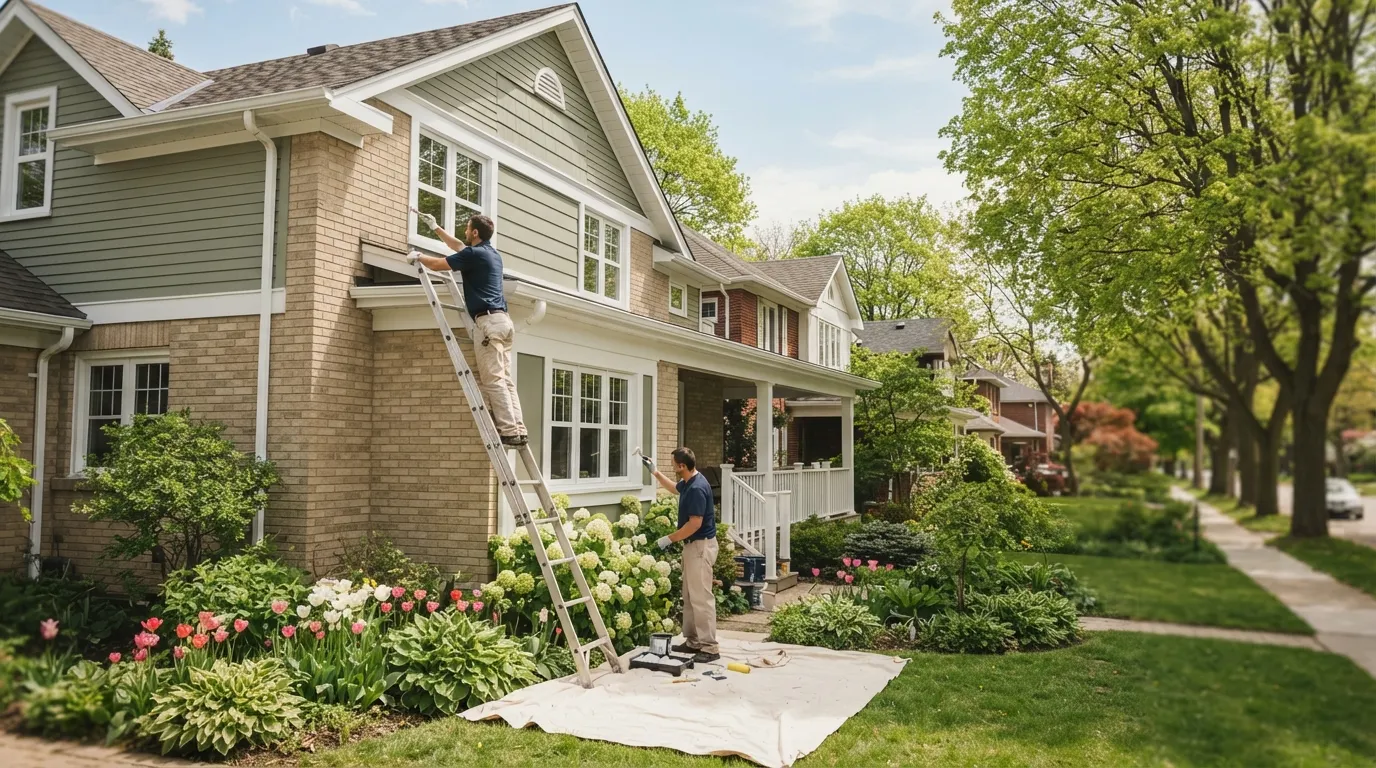
When is the best time to paint my home's exterior in Ontario?
Aim to paint exteriors during a window of several dry, mild weeks—typically late May through September in southern Ontario—when temperatures consistently stay above the paint manufacturer's minimum and rain is unlikely for several days.
Temperature and humidity rules
Most exterior paints require surface and air temperatures between roughly 10°C and 32°C and moderate humidity. High humidity slows drying and can trap moisture under the film; temperatures below the manufacturer minimum prevent proper film formation. Always follow the product data sheet for minimum/maximum temperatures and dew point guidance.
Dry weather window
Successful exterior painting needs several consecutive dry days: priming and topcoats each need adequate cure time. In Oakville, on Lake Ontario with a South Central Ontario climate, plan for late spring through summer as your most reliable dry spell, but build flexibility into scheduling for short rainy periods.
Surface condition and seasonal timing
Beyond calendar months, surfaces must be dry and at stable temperature; spring painting can fail if you paint over winter moisture or before wood has fully dried after thaw. Late summer and early fall often give the best combination of heat and lower humidity for paint adhesion and cure.
Step-by-Step: The Ontario Exterior Painting Season: Timing It Right
This sequence helps you plan an exterior paint project in Oakville or nearby communities like Burlington and Mississauga, taking seasonal weather and practical tasks into account.
- 1
1. Inspect and prioritize late winter to spring
Walk the property in late winter or early spring to note peeling, rot, and areas needing caulking or replacement. Use this time to order materials and book contractors for the best summer slots.
- 2
2. Confirm materials and manufacturer limits
Choose exterior paint and primers suitable for Ontario weather; check technical data sheets for temperature, humidity, and dew point limits. Plan to apply when conditions meet those specifications for at least the recommended dry time between coats.
- 3
3. Schedule surface prep for ideal dry days
Pressure-wash, scrape, sand, and replace trim or rotted wood on a dry stretch; prep work needs dry surfaces to avoid trapping moisture. If painting in spring, wait until wood has dried after snowmelt and rain events.
- 4
4. Time priming and first coat to stable weather
Apply primer and a first coat during a forecasted multi-day dry period with suitable temperatures. Make sure dew point and evening lows won't cause condensation on freshly applied coatings.
- 5
5. Allow manufacturer-recommended cure before second coat
Follow recoat intervals on the product data sheet—rushing the topcoat in cool, humid conditions can cause poor adhesion or blistering. Monitor the forecast and avoid painting just before expected heavy rain or significant temperature swings.
- 6
6. Final inspection and touch-ups in late season
After the job, inspect caulking and seams for gaps or missed spots and do touch-ups while the contractor is still on site. If you paint into early fall, be mindful of earlier nights and the increased chance of dew or frost.
Mistakes to Avoid
Timing and technique errors are the most common causes of early paint failure. These mistakes are avoidable with basic preparation and by matching product requirements to real local weather and microclimates.
Painting too early in spring
Painting immediately after the last frost or during frequent thaw cycles can trap moisture in siding and trim. Wait until surfaces have dried from snowmelt and spring rains—rush jobs often result in peeling and blistering within months.
Ignoring the dew point and evening lows
Painting late in the day when evening temperatures drop below product thresholds risks condensation forming on the surface overnight. Apply coatings in late morning to mid-afternoon when the day is warmest, and check dew point forecasts.
Skipping manufacturer instructions to save time
Using a paint outside its specified temperature or humidity range, or shortening recoat times, is a frequent cost-cutting mistake that reduces service life. That one shortcut can lead to higher long-term costs from earlier repainting and repairs.
Not accounting for lake and urban microclimates
Oakville sits on Lake Ontario and experiences microclimates—areas near the lake can have higher humidity and cooler mornings. Similarly, sheltered north-facing walls and urban heat islands behave differently; discuss exposures with your contractor and choose timing accordingly.
What Affects Your Outcome
These factors change how and when your exterior paint project should proceed.
Local weather patterns
Frequency of rain, average humidity, and seasonal temperature swings in Oakville and Halton Region determine available dry windows and suitable painting months.
Surface moisture and material
Porous materials like new wood and certain sidings retain moisture longer; masonry and stucco need longer drying and may require specific primers.
Paint chemistry and manufacturer limits
Latex, acrylic, and alkyd coatings have different temperature and humidity working ranges. Always follow product technical data sheets for best results.
Contractor scheduling and workload
Contractors are busiest during southern Ontario's painting season; booking early gives you better timing choices and more favorable weather windows.
Permit or condo rules
Some municipalities or condo associations have rules about work hours, scaffolding, and contractor credentials—confirm with Oakville’s local building office or your condominium board before scheduling.
Nearby trees, landscaping, and sun exposure
Overhanging trees increase the chance of damp surfaces and sap contamination, while sunny south-facing walls bake faster. These exposure differences affect both drying time and product selection.
Frequently Asked Questions
Can I paint in early May in Oakville?
Early May can work if daytime temperatures and surface temperatures are within the paint's specified range and there is a forecasted dry period. However, watch for spring rains and residual moisture from thaw; if surfaces are damp, delay until they are dry for several days.
What temperature is too cold to paint exterior trim?
Many modern acrylic exterior paints specify a minimum application temperature around 10°C, but some products can be applied slightly cooler if rated as low-temp formulations. Always check the technical data sheet and avoid painting when evening lows could drop below the recommended minimum during cure.
How long after pressure-washing should I wait to paint?
Allow at least 24–72 hours for siding and trim to dry after a pressure wash; porous materials and shaded areas may take longer. Ensure no rain is forecast during the drying window to prevent rewetting before paint is applied.
Does humidity matter as much as temperature?
Yes. High humidity slows evaporation and cure, which can lead to sagging, extended tack times, or chalking. Look at both temperature and relative humidity—and the dew point—when picking painting days.
Should I wait until autumn to paint for cooler temperatures?
Early fall can be an excellent time because humidity often drops and temperatures are moderate, but nights cool earlier and frost risk increases. If you anticipate cooler nights, ensure coats have enough time to cure before temperatures fall below manufacturer limits.
Do I need a permit to paint my exterior in Oakville?
Painting typically doesn’t require a building permit, but work that affects structure, adds scaffolding in public space, or changes historic facades might. Confirm with the Town of Oakville building department or your condominium board for local rules and any required notifications.
Free exterior paint timing inspection for Oakville homes
Schedule a quick assessment of your home's exposures and a recommended painting window—no pressure, just practical timing advice.
Get a Free Quote