
Deck Staining in Ontario: Products, Timing and Technique
Learn which products to use, when to stain in Oakville's climate, and how to get a long-lasting finish.
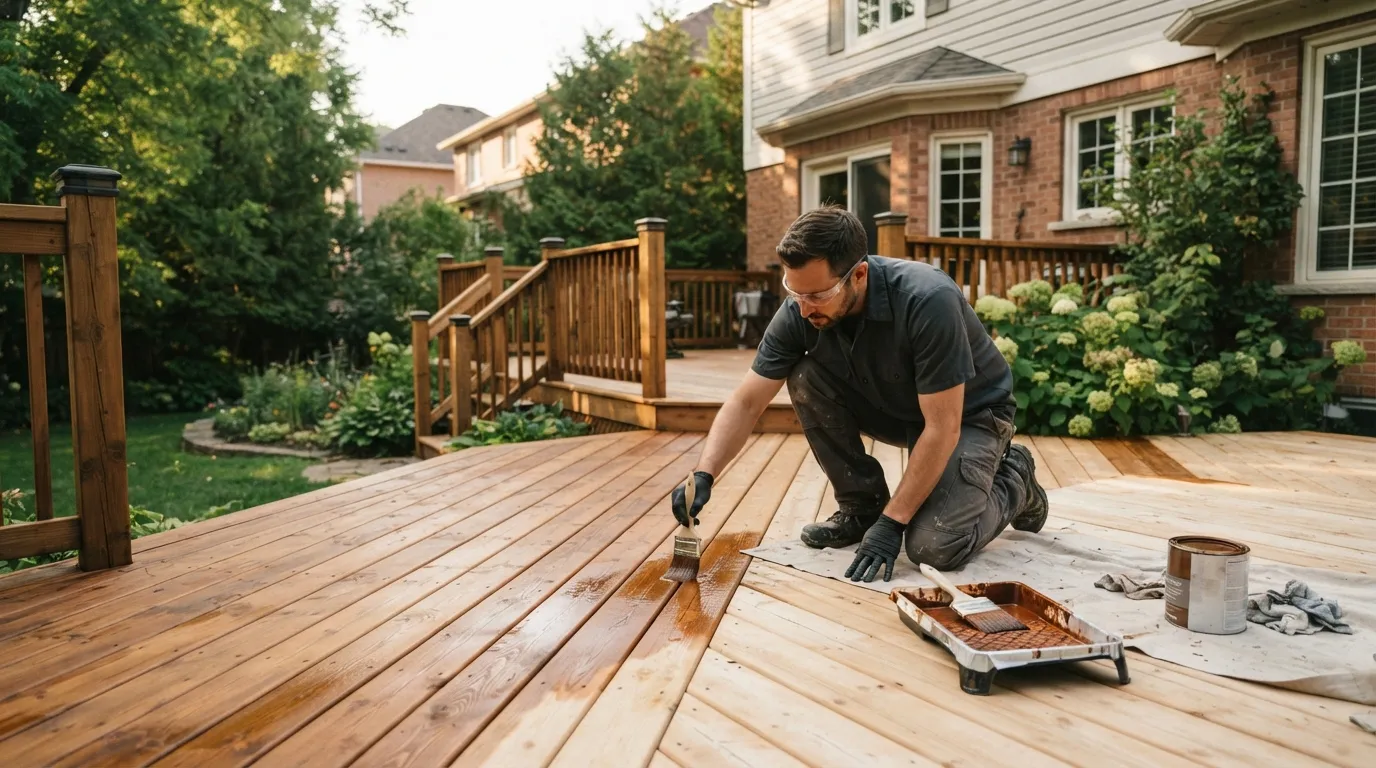
When should I stain my deck and what does that actually mean?
Staining a deck means applying a film-forming or penetrating finish to protect wood from moisture, UV and wear; in Ontario, stain timing centers on surface dryness and mild temperatures—typically late spring through early fall, avoiding freeze/thaw and consistently wet conditions.
What 'stain' covers (sealers, stains, and coatings)
Products range from clear sealers (mainly moisture control) to translucent and semi-solid stains (pigment with some film-forming properties) to solid stains or paints (opaque, heavier film). Choose the level of opacity based on how much grain you want to show and the amount of UV protection required.
Penetrating vs film-forming
Penetrating oil and water-repellent preservatives soak into the wood and repel water without a thick surface film, typically easier to maintain. Film-forming products (urethane, acrylic, or alkyd-based) sit on the surface and offer stronger abrasion and UV resistance but can peel if prep or conditions are wrong.
Ontario climate matters
Oakville and Halton County sit in a variable climate with wet springs, humid summers, and freezing winters—nearby Mississauga and Burlington have the same challenges. Successful staining requires a window of dry weather with daytime temperatures ideally between 10–25°C and no rain forecast for 24–48 hours.
Step-by-Step: Deck Staining in Ontario: Products, Timing and Technique
A clear, practical procedure to prepare, choose and apply stain so your deck lasts longer in Oakville's climate.
- 1
Inspect and plan
Walk the deck and note rot, loose fasteners, or structural problems before staining—stain is not a structural repair. Check local building department guidance in Halton Region if you plan replacement or major repairs; confirm any homeowner association rules if applicable.
- 2
Choose the right product
Decide between a penetrating oil-based or a film-forming acrylic product based on the wood species, existing finish, and appearance preference. For hardwoods or pressure-treated pine common in Oakville, translucent oil-based stains are a common choice for good penetration and easier spot maintenance.
- 3
Prepare the surface
Sweep, power-wash (low pressure) or hand-scrub to remove dirt, mildew, and old loose finish; allow wood to dry 48–72 hours depending on humidity. Replace rotten boards and tighten fasteners; sanding is necessary where old film-forming finishes are peeling or if you need to remove greyed surface fibers.
- 4
Test a small area
Always try a stain and finish sequence on a hidden or small visible area to confirm look and adhesion. In Ontario's varied humidity, testing also shows drying time and how the product performs under local conditions.
- 5
Apply stain correctly
Use a brush for best penetration on end grains and railing tops, and a roller or pump sprayer for field areas—back-brush any sprayed or rolled areas to work the product into the wood. Apply only one thin coat unless the manufacturer explicitly allows multiple coats; thick wet films trap moisture and increase peel risk.
- 6
Cure and maintain
Let the stain cure fully—dry time varies by product and weather; avoid furniture placement for at least 24–48 hours. Plan annual inspections and spot maintenance; re-stain frequency in Ontario is commonly every 2–5 years depending on product, exposure and prep quality.
Mistakes to Avoid
Several common missteps cause early failure of deck finishes in Ontario: poor prep, staining at the wrong time, and the wrong product choice. Avoid these to get the life and look you expect from your deck finish.
Staining too soon after power-washing
Power-washing lifts wood fibers and drives moisture deep into the deck—rushing to stain before the deck is dry leads to poor penetration and adhesion. Allow 48–72 hours dry time in summer, longer in cool or humid weather, and verify dryness by touch or a moisture meter.
Using paint or solid stain over failing film finishes without full removal
Applying another heavy film over a peeling or chalking surface traps moisture and leads to accelerated delamination. If the existing coating is compromised, strip or sand back to stable substrate before applying a new film-forming product, or choose a penetrating stain after thorough prep.
Ignoring wood species and prior treatment
Pressure-treated lumber, cedar, and tropical hardwoods accept stains differently; pressure-treated wood often holds more moisture and may need extra drying time. Use products formulated for your wood type and follow manufacturer guidance on priming end grains or using specialized preservatives on exposed cuts.
Skipping sample test areas
Colour and sheen look different on aged wood versus new lumber, and drying times vary by microclimate. Testing avoids costly rework and ensures you are willing to live with the result under Oakville’s sun and rain patterns.
What Affects Your Outcome
These factors change how long your deck finish lasts and how much work is required.
Weather and seasonal timing
Temperature, humidity, and recent rainfall directly affect drying and adhesion; plan work during multi-day dry windows in late spring to early fall.
Wood species and condition
Hardwoods, softwoods and pressure-treated lumber absorb stains differently; older greyed wood often needs more prep to accept a finish.
Product type and quality
Higher-quality stains and rational product choice (penetrating vs film) perform longer and resist UV and moisture better than bargain products.
Preparation quality
Proper cleaning, drying, and repair before staining matters more to longevity than the brand name; poor prep causes most failures.
Application technique
Brushing into end grains, avoiding puddles, and following the manufacturer's coverage and recoat instructions prevents premature peeling.
Maintenance schedule
Regular cleaning, prompt spot repairs, and reapplication at the right interval keep the finish performing; ignoring small failures allows bigger problems to form.
Frequently Asked Questions
How often should I restain a deck in Oakville, ON?
Restaining frequency depends on product and exposure—penetrating stains often need attention every 2–3 years, while higher-quality semi-solid or film-forming systems can last 3–5 years. Inspect annually for fading, water beading failure, or wear in high-traffic zones to decide.
Can I stain over a grey, weathered deck?
You may stain grey wood, but better results come from cleaning and light sanding to remove loose fibres and lift the grain for even penetration. Use a brightener after cleaning if the wood is badly oxidized; test an area to confirm colour acceptance.
Is oil-based or water-based stain better for pressure-treated wood?
Both can work if the wood is fully dry; oil-based penetrating stains historically perform well on pressure-treated lumber, but modern water-based stains offer faster drying and easier cleanup. The key is ensuring the wood has dried—often several weeks to months for new pressure-treated boards—before staining.
What’s the best way to remove mildew and algae before staining?
Scrub with a deck cleaner containing mildew-safe detergents or use a diluted bleach solution (follow product directions and rinse thoroughly). Power-wash on a low setting if needed, and allow adequate drying time before applying any stain.
Do I need a permit to replace deck boards or stain in Oakville?
Staining alone typically does not require a permit, but structural replacement or enlarging a deck may. Building department rules vary across Halton Region—confirm with Oakville’s building services and check with your insurer or HOA if the work affects property lines or safety features.
How can I tell if a finish has failed and needs removal?
Signs include widespread peeling, flaking, or a powdery chalk that won’t rinse away, and water pooling rather than beading. Small isolated failures can be spot-sanded and touched up; extensive delamination usually needs full removal to a stable substrate before re-finishing.
Free deck inspection and stain recommendation for Oakville homeowners
Book a no-obligation assessment to get product and timing advice tailored to your deck and local conditions.
Get a Free Quote